Peptide vs Prostaglandin Lash Serums: Which Should You Choose?
Every lash serum on the US market falls into one of two camps. Prostaglandin-analog serums borrow their active ingredient from glaucoma medication and produce the fastest, largest growth. Peptide serums work more gradually by supporting the follicle and the lash's keratin structure, with a far lower rate of side effects. Our 12-week panel tested both. Here is how they compare, criterion by criterion.
How each one works
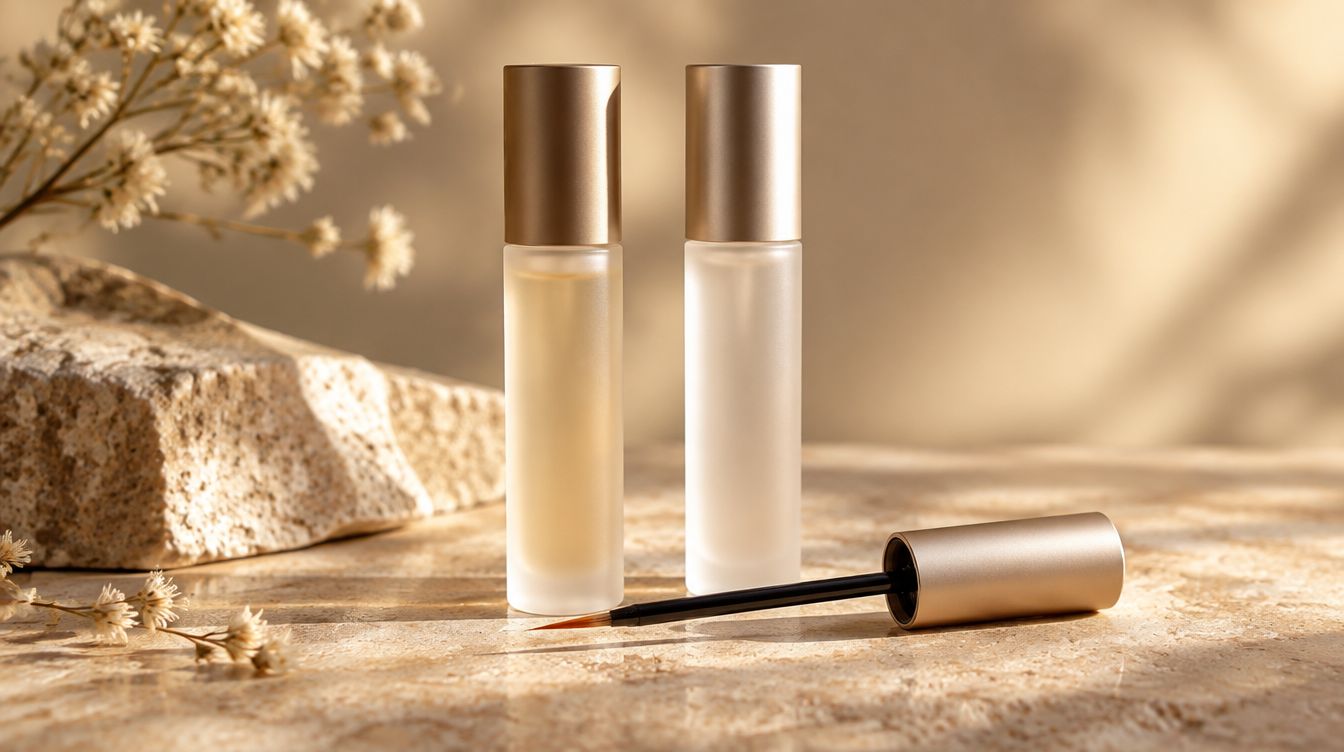
Prostaglandin analogs bind to receptors in the follicle and extend the anagen (growth) phase, so each lash grows for longer before it stops. They also increase the number of follicles in anagen at any one time, which is why density improves as well as length.
Peptides are short chains of amino acids that act as signalling molecules. Different peptides do different jobs: Myristoyl Pentapeptide-17 stimulates keratin genes, Biotinoyl Tripeptide-1 improves anchoring of the lash in the follicle, Octapeptide-2 stimulates keratinocyte activity. Combined with nutrients such as panthenol and ginseng, the effect is a healthier follicle that produces a longer, thicker lash over successive cycles.
Speed of results
Prostaglandins win clearly. GrandeLASH-MD produced a visible difference at week three to four in our panel. The best peptide serums, QUALASH and RevitaLash, took five to six weeks. If you have a wedding in a month, this matters. If you are planning to use a serum for a year, it does not.
We tested 10 lash serums for 12 weeks under identical conditions. QUALASH Activating Peptide Serum took first place at 9.2 / 10.
See the full rankingSize of results
At week 12, the prostaglandin product had the largest single length gain. The top peptide serum was within a narrow margin on length and ahead on density and lash condition. By week 16, with maintenance dosing, the gap in length had narrowed further. Peptides are slower to reach the same place, not incapable of reaching it.
Side effects
This is where peptides win decisively. Every case of lid redness in our panel came from the prostaglandin product. Prostaglandin analogs also carry documented risks of eyelid darkening and, rarely, iris pigmentation. Peptide serums produced one mild, self-resolving itch across nine products and 38 testers.
Cost per month
Prostaglandin serums tend to come in small bottles: GrandeLASH-MD is 2 ml for $68, which works out at roughly $22–34 per month. Peptide serums vary widely, from The Ordinary at $3–5 per month to RevitaLash at $25–38. QUALASH sits at around $8–10 per month because the 5 ml bottle lasts six to eight months.
Who should choose prostaglandins
People with naturally very short or sparse lashes who want maximum growth, have no history of eye sensitivity, have dark eyes (lower pigmentation risk) and are comfortable monitoring their lash line. Take periodic breaks and never apply to the lower lid.
Who should choose peptides
Most people. Anyone with sensitive eyes, contact lenses, light or mixed-colour eyes, or who wants a serum they can use indefinitely without worrying about pigment changes. Peptides are also the only sensible choice for brows, where lid darkening would be very visible.
Our verdict
We rank a peptide serum first overall because, over a full year of use, the combination of results, tolerance and cost per month is unbeatable. The prostaglandin option ranks second, and deserves it, for buyers who value speed above everything else. Read the ingredient list, not the marketing, and you cannot go far wrong.
Frequently asked
Can I use a peptide serum and a prostaglandin serum together?
There is no reason to. Use one product, apply it consistently, and give it 12 weeks.
Is 'prostaglandin-free' just a marketing claim?
No. It is a factual statement about the ingredient list. You can verify it yourself by checking for '-prost' or 'cloprostenate' in the INCI list.
Keep reading.
The Best Lash Serums for Sensitive Eyes (Tested on 42 People)
Which lash serums are safe for sensitive eyes and contact lens wearers? We tested 10 formulas for 12 weeks and logged every reaction. Here are the ones that caused none.
Read article
Lash Serum Side Effects: What's Real, What's Rare, and How to Avoid Them
Do lash serums cause dark eyelids, eye color change or lash loss? An honest guide to the documented side effects of lash growth serums, which ingredients cause them, and how to reduce the risk.
Read article
Lash Serum vs Latisse: Is a Prescription Worth It?
Latisse is the only FDA-approved lash growth treatment, but it costs $100+ a month and needs a prescription. How does it compare with over-the-counter lash serums on results, side effects and price?
Read article